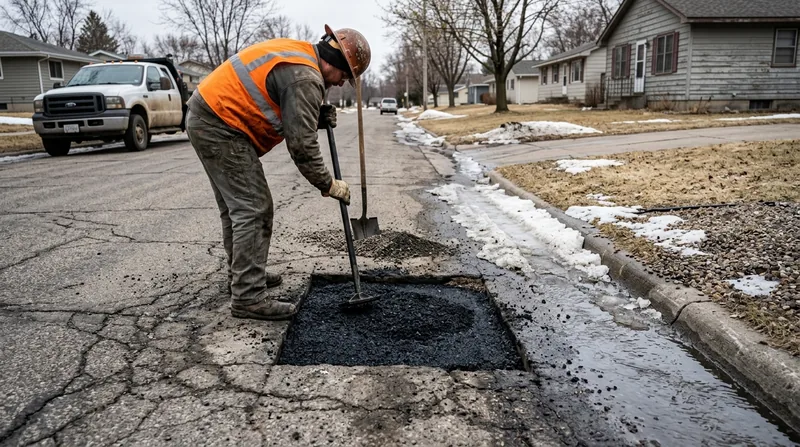




Pothole Repair & Asphalt Patching in St. Cloud addresses the single most common failure point in the Granite City: the moment when plow blades meet soft sandy base and the spring thaw softens everything underneath. St. Cloud sits on glacial outwash along the Mississippi river terraces and till uplands around the old quarry ground, which means the same winter freeze that governs your foundation footing also governs what happens to your driveway every March and April. Potholes here are not random. They form where water enters the base layer, freezes, heaves, and then thaws into a cavity that gets wider each time a plow blade cuts it or a tire drops into it. We saw-cut the break, remove loose material, and pack hot mix flush so the repair holds through plow season and into the next cycle. This is not a patch that lasts forever, but it is honest work that buys time and keeps a driveway safe to drive on.
Why Pothole Repair Matters in St. Cloud's Freeze-Thaw Cycle
The Stearns County frost zone runs 42 inches deep, and that depth is no accident. Winter freeze penetrates hard, spring thaw is slow and wet, and the base layer under your asphalt stays saturated for weeks. When water gets into the base and freezes, it expands. When it thaws, it leaves a void. A pothole that starts as a hairline crack in March becomes a 4-inch cavity by May if it is not addressed. Plow blades accelerate the damage, and the next freeze-thaw cycle makes it worse. A single pothole left alone can spread into a section of failed pavement that costs far more to fix than the original repair would have.
- We identify the extent of base failure before deciding whether a patch will hold or whether resurfacing is the better choice.
- We saw-cut clean edges so the patch bonds to solid asphalt, not to loose edges that will fail again next spring.
- We compact the base material and pack hot mix in layers so the repair matches the surrounding pavement in density and durability.
- We remove water and debris from the repair area before any hot mix goes down, because moisture under new asphalt is the fastest path to failure.
Patching works best when the surrounding pavement is still sound and the pothole is isolated, not part of a pattern of alligator cracking or widespread base failure.
Key info: A pothole in St. Cloud's sandy river-terrace soils can grow from a 2-inch depression to a 6-inch cavity in a single winter. The sand drains fast in summer but holds water and frost pressure in spring. Catching a pothole early and patching it before the base fails underneath saves hundreds of dollars in resurfacing work later.
For more on when repair makes sense and when replacement is the better path, see our page on driveway repair.
Minnesota does not require a state contractor license for asphalt paving when it is the only special skill a business performs, so the regulatory load sits at the city level. St. Cloud, Sauk Rapids, Sartell, and surrounding municipalities each have their own permit requirements for work in the public right-of-way, curb cuts, and aprons. You can verify permit requirements with your city building department before calling us, or we can help you navigate the process once you have decided on a repair approach.
How We Repair Potholes and Patch Asphalt in St. Cloud
Our process is straightforward and field-tested. We start with a site visit to determine whether the pothole is isolated damage or part of a larger failure pattern. If patching makes sense, we saw-cut the perimeter, remove all loose and failed material down to solid base, and compact what remains. We then pack hot mix asphalt in two layers (binder course and surface course) and finish flush with the surrounding pavement. The entire repair is compacted so that it bonds to the existing asphalt and resists water entry. The goal is a repair that lasts through multiple freeze-thaw cycles and holds up to plow blades.
- We assess the pothole and the surrounding pavement to determine whether the damage is localized or systemic.
- We saw-cut clean, straight edges at a 90-degree angle so the new asphalt bonds fully to the existing pavement.
- We remove all loose material, water, and debris from the repair area by hand and with air equipment.
- We compact the base material and tamp it to the correct density before any hot mix is placed.
- We place the binder course (lower layer) and compact it, then place and finish the surface course (top layer) flush with the existing pavement.
- We do not allow traffic on the repair for at least 24 to 48 hours while the asphalt cools and sets, depending on air temperature and humidity.
The time from saw-cut to finish is typically 2 to 4 hours for a single pothole or a small cluster of repairs. Larger patching jobs (multiple potholes across a driveway or parking lot) take a full day or more.
Real example: A residential driveway on the river-terrace side of St. Cloud near St. Cloud State developed three potholes in a 40-foot section after the 2024 spring thaw. The surrounding pavement was sound, so patching was the right call. We saw-cut all three areas, removed soft sand and water from the base, compacted new base material, and packed hot mix in each cavity. The repair cost far less than a full mill and overlay and bought the homeowner three to five years before resurfacing becomes necessary.
When a driveway has extensive cracking or multiple potholes across a large area, asphalt resurfacing and overlay is often the smarter long-term choice.
Pothole Repair Methods and When to Use Each
| Approach | Description | Best for |
|---|---|---|
| Saw-Cut and Hot Mix Patch | Cut clean edges, remove failed base and asphalt, compact new base, place hot mix in two layers, finish flush. | Single potholes or small clusters in otherwise sound pavement; freeze-thaw damage in sandy soils. |
| Full-Depth Patch | Remove asphalt and base material completely to subgrade, replace with new compacted base and hot mix asphalt in full depth. | Potholes where the base is severely compromised or water is trapped beneath; larger areas of failure. |
| Pothole Repair with Base Stabilization | Saw-cut, remove failed material, add stabilizing base course (recycled asphalt or gravel), compact, and place hot mix. | Potholes in areas prone to water infiltration; sandy or poorly draining soils common in St. Cloud river terraces. |
| Mill and Overlay (When Patching Is Not Enough) | Remove top 1.5 to 2 inches of asphalt, replace with new hot mix, and recompact the entire surface. | Multiple potholes across a driveway or parking lot; extensive alligator cracking; base is still sound but surface is failed. |
The method we choose depends on the size of the pothole, the condition of the base, and the extent of damage to surrounding pavement. A single isolated pothole in sound pavement gets a saw-cut patch. Potholes that are part of a pattern of alligator cracking or that cover more than 30 to 40 percent of the surface are a signal that the base is failing and that milling and overlay or full-depth replacement is the better investment.
Pothole Repair and Asphalt Patching Cost in St. Cloud: What to Expect
The cost of pothole repair in St. Cloud depends on the size and depth of the pothole, the condition of the base material, and whether the repair is isolated or part of a larger pattern of pavement failure. A single small pothole (roughly 12 to 18 inches across and 3 to 4 inches deep) typically costs between $450 and $750 to repair. Larger potholes or multiple repairs on the same driveway or parking lot will cost more, but the per-pothole cost often decreases as we address several at once.
- Saw-cut and hot mix patch: Starting at $450 for a single small pothole, including base preparation and two-layer compaction.
- Multiple potholes (3 to 5 on the same driveway): $400 to $600 each, depending on size and base condition.
- Full-depth replacement (when the base is severely compromised): $600 to $1,200 per pothole, depending on depth and area.
- If patching is not enough and the pavement shows extensive cracking or alligator patterns, mill and overlay or full resurfacing may be the smarter long-term choice and is quoted separately based on square footage and depth.
The factors that move the cost up or down are the size and depth of the pothole, the condition of the base (sandy soils in St. Cloud river terraces often require more base preparation than till uplands), whether we need to remove and replace base material or can simply compact and patch, and access (narrow driveways or parking lots with tight spaces may take longer). We always provide a written estimate with tonnage specifications and a timeline before work begins, and there is no charge for the estimate or the site visit.
Call us at (320) 281-0372 for a free estimate, or visit our pricing page for a full breakdown of our rates and what is included at each level.
Pothole Repair and Asphalt Patching Near Me: What St. Cloud Homeowners Should Know When Hiring
Choosing the right contractor for pothole repair and asphalt patching is one of the most important decisions you will make about your driveway. The history of paving fraud in this country is the itinerant door-to-door crew with out-of-state plates and a story about leftover asphalt from a job nearby. The single strongest trust signal is a contractor who is local, has a local address and local phone number, and can provide references from work in your neighborhood. We have been in business in St. Cloud and the surrounding area since 2009, and we are fully insured. You can verify our insurance coverage and request a certificate at any time.
- Ask for multiple estimates (at least two or three) from contractors who are willing to provide written quotes with tonnage and thickness specifications, not just a price.
- Check that the contractor is fully insured and ask to see a certificate of insurance before any work begins.
- Verify that the contractor understands local permitting rules for your city or village; work in the public right-of-way or on aprons may require a permit from your building department.
- Ask for references from homeowners or property managers in St. Cloud, Sauk Rapids, Sartell, or nearby areas where the contractor has done similar work.
- Be wary of any contractor who demands a large cash deposit upfront, quotes a price that is significantly lower than others, or refuses to provide a written estimate with specific details about the repair method and materials.
- If your driveway is in an HOA community, check the architectural standards or CC&Rs before scheduling repair; some HOAs have rules about patching versus resurfacing or about the appearance of patches.
Once you have chosen a contractor, ask for a clear timeline, a written estimate that specifies the repair method and the materials to be used, and an explanation of how long the repair will take and when you can drive on it again. A reputable contractor will answer all of these questions and will not pressure you into a decision.
Ready to get started? Contact us for a free estimate and a conversation about the best repair option for your driveway or parking lot. We respond within 24 hours at (320) 281-0372.
Pothole Repair & Asphalt Patching in St. Cloud: Pricing Guide
| Service | Price | Details |
|---|---|---|
| Single small pothole | Starting at $450 | Saw-cut patch, 12 to 18 inches across, includes base prep and two-layer hot mix compaction |
| Multiple potholes (3 to 5 on same surface) | $400 to $600 each | Per-pothole cost decreases with multiple repairs on the same driveway or parking lot area |
| Full-depth pothole repair | $600 to $1,200 per pothole | Complete removal of asphalt and base, replacement with new compacted base and hot mix when base is compromised |
| Extensive patching or alligator cracking | On estimate | When potholes cover more than 30 to 40 percent of surface, mill and overlay is often the better long-term choice |
| Travel and site visit | Included | No separate mileage fee in St. Cloud and surrounding Stearns County and nearby service areas |
| Written estimate | Free | Includes tonnage specifications, repair method, timeline, and no obligation to book; response within 24 hours |
Indicative pricing, the exact cost depends on square footage, finish, and site access. Free personalized estimate within 24h at (320) 281-0372.


